

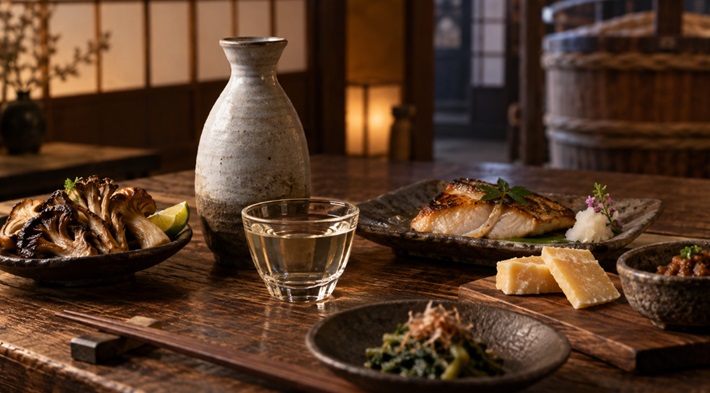
Sake can be light, fruity, clean, or even slightly sweet. Yamahai sake often takes a different path. It is known for deeper flavors, lively acidity, and plenty of umami. These qualities can make it a great match for grilled meats, mushrooms, rich sauces, and other savory foods.
But what exactly makes Yamahai different? The answer begins with the way its yeast starter is prepared.
A Traditional Approach to Sake Brewing
Every batch of sake begins with a yeast starter called shubo or moto. It contains rice, water, koji, yeast, and lactic acid. The starter gives the yeast a safe place to grow before the main fermentation begins.
Most modern sake brewers add prepared lactic acid directly to the starter. This method is fast, predictable, and easy to control.
Yamahai brewing takes more time. Instead of adding lactic acid at the beginning, the brewer allows naturally occurring lactic acid bacteria to develop inside the starter. This helps create the acidic environment needed to protect the yeast.
The word “Yamahai” comes from yamaoroshi-haishi-moto. It refers to leaving out the hard rice-mashing step used in the older Kimoto method. Yamahai was developed as a way to simplify that traditional process while still allowing natural lactic acid development. Sake Times offers a helpful comparison of the Kimoto and Yamahai methods.
How Fermentation Shapes the Flavor
The longer starter-making process gives microorganisms more time to influence the sake. As a result, Yamahai sake may have more noticeable earthy, nutty, creamy, or slightly gamey notes.
Of course, not every bottle tastes the same. Some are clean and balanced, while others are bold and rustic. The rice, water, yeast, temperature, and choices made by the brewer all affect the final taste.
Many Yamahai sakes also have stronger acidity. This does not mean they taste sharply sour. Instead, acidity adds structure and energy. It can keep a rich sake from feeling too heavy and help refresh the mouth between bites of food.
Why Yamahai Sake Has More Umami
Umami is the deep, savory taste often found in mushrooms, aged cheese, soy sauce, seaweed, and slow-cooked meat. Yamahai sake is often associated with a fuller umami character because of its traditional starter and slower development.
This savory quality gives the sake weight and depth. Instead of disappearing beside a strong dish, it can hold its place and create a balanced pairing.
The combination of acidity and umami is especially useful at the table. Acidity cuts through fat, while umami connects with the savory flavors in the food.
Foods That Pair Well With Yamahai
Yamahai sake can work with Japanese food, but it does not need to stay within one cuisine. Its richer personality opens the door to many creative pairings.
Good choices include:
- Grilled beef, pork, or chicken
- Roasted mushrooms and root vegetables
- Miso-glazed fish
- Braised or slow-cooked meat
- Smoked seafood
- Soy-based stews
- Aged or hard cheeses
- Dishes with earthy or fermented ingredients
Very light foods may be overpowered by a bold Yamahai. When planning a pairing, try to match the weight of the sake with the weight of the meal.
Should Yamahai Be Served Warm?
Yamahai can be enjoyed chilled, at room temperature, or gently warmed. Chilling may highlight its freshness and acidity. Warming it can bring forward softer textures, earthy aromas, and savory flavors.
Try tasting the same bottle at two temperatures. You may be surprised by how much it changes.
Yamahai sake offers a look into an older style of brewing while remaining exciting at today’s table. Its acidity, umami, and richer flavor make it worth exploring, especially for anyone who enjoys bold food and drinks with character.
This post was written by a professional at Fortu. Fortu stands out among the top Restaurants St Petersburg FL, offering an elevated Pan-Asian dining experience in the heart of St. Petersburg, Florida. Celebrating Asia’s vibrant and diverse culture, Fortu introduces bright and bold flavors to a bright and bold city with a menu of locally and sustainably sourced options, from small bites to hearty delicacies. Whether winding down from a beach day or celebrating a special occasion, guests can enjoy a lush, alluring atmosphere and an authentic taste of Asia’s divine cuisine at one of the finest Restaurants On Central Ave St Pete.